

Ever found yourself staring at sheet music, feeling like you’re deciphering hieroglyphics? You’re definitely not alone! Reading music can seem daunting at first, but what if I told you that mastering music notes is easier than you think? Just like learning the alphabet opens the door to reading, understanding music notes unlocks the world of melodies, harmonies, and rhythms. Imagine being able to sit at a piano or pick up a guitar and play your favorite songs with confidence! In this easy guide to music reading, we’ll break down the essentials of music notation into bite-sized pieces that anyone can digest. So, grab your instrument, and let’s embark on this melodic journey together!
Unlocking the Staff: Understanding the Basics of Music Notation
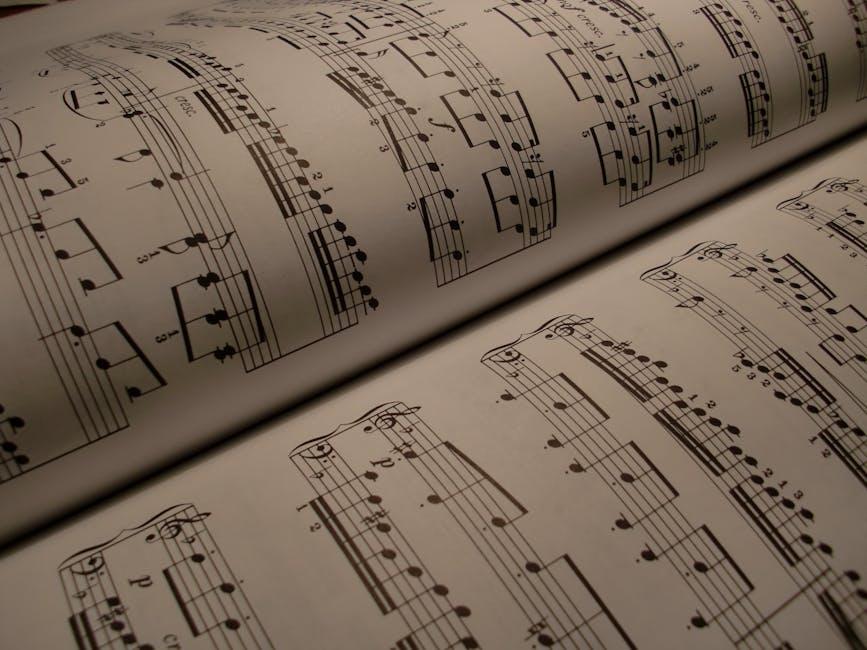
When you first look at sheet music, it might seem like a jigsaw puzzle that’s missing a few pieces. But don’t let that overwhelm you! The staff, which consists of five lines and four spaces, serves as your playground for musical notes. Each line and space represents a different pitch, and this is where the magic begins. Notes sit on these lines and spaces like guests at a party, each with a unique role and sound. Think of it this way: if the staff were a city, the lines would be the busy streets, and the spaces would be cozy little parks where melodies come to life.
Now, let’s get to the nitty-gritty! The notes on the staff are not just random symbols; each one carries a specific pitch. The notes on the lines from bottom to top are E, G, B, D, and F (you can remember this with the phrase “Every Good Boy Does Fine”). Meanwhile, the spaces spell out the word FACE! It’s like a musical acronym that sticks with you. Knowing these fundamentals will set you up for success as you dive deeper into music. And once you’ve unlocked the basics of notation, you can start playing your favorite tunes, turning those abstract notes into real sounds that resonate with you and others.
Notes and Their Friends: Navigating Different Clefs and Keys
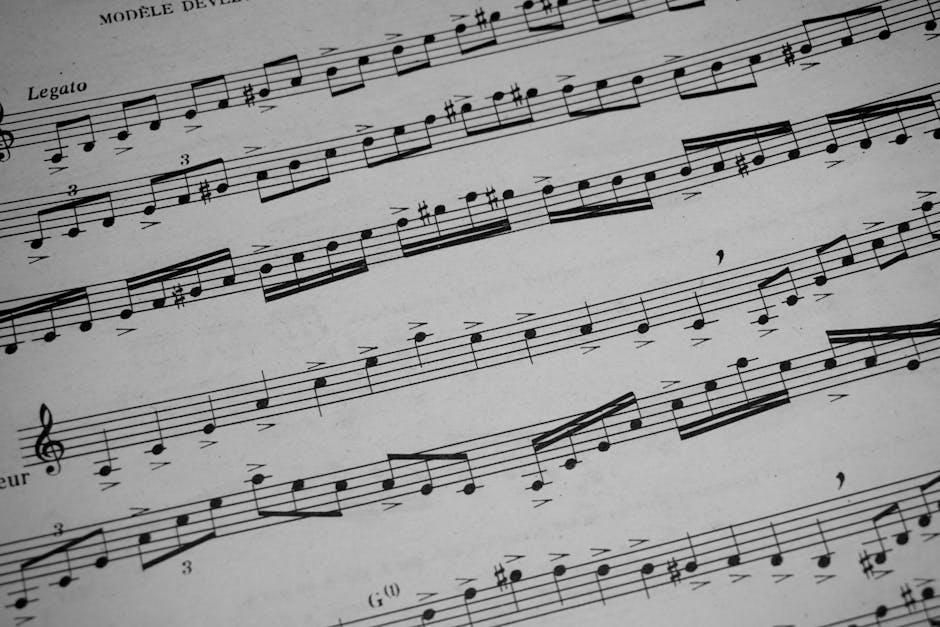
When you dive into the world of music, you quickly realize that notes don’t just float around aimlessly; they hang out in specific groups we call clefs. Each clef is like a VIP section at a concert, shining a spotlight on different notes. The two biggest players are the treble clef and the bass clef. They each bring a unique vibe to the party—treble clef is all about those higher-pitched, bright sounds, while bass clef hangs out with the deeper, richer tones. Ever noticed how a piano’s right hand plays the melody, while the left hand provides that solid foundation? That’s clefs working together like best buddies! So, whether you’re jotting down a lively tune or crafting a heartfelt ballad, it’s crucial to know which clef to use to get your musical message across.
Now, let’s spice things up with keys! Think of music keys as flavors in a kitchen—each one adds a unique twist to your composition. There’s major for that bright and cheerful vibe and minor for when things get a little moody or introspective. Here’s how they stack up:
| Key | Mood |
|---|---|
| Major | Happy, Uplifting |
| Minor | Melancholic, Dark |
| Dorian | Bright but Mysterious |
| Mixolydian | Playful, Funky |
With clefs painting the picture and keys adding the flair, you’re all set to create your musical masterpieces. So grab your instrument, and don’t be shy—there’s a whole adventure waiting for you in the notes you’ll play!
Rhythmic Patterns: How to Dance with Time Signatures

Understanding time signatures is like unlocking the door to a hidden dance floor where each beat beckons you to move! Time signatures, written as a fraction, tell us how many beats are in each measure and what kind of note gets the beat. For example, a 4/4 time signature means you’ll have four beats in a measure, with the quarter note getting one beat. But don’t stop there! Feel how these patterns create rhythms that can sway, skip, or even leap across the musical landscape. Allow yourself to explore the essence of waltz with 3/4, where the first beat feels like a gentle push, and the following two glide smoothly in a loving embrace.
To groove with these time signatures, you’ll want to get comfortable tapping your foot, clapping your hands, or even snapping your fingers along with the music. Let’s break it down—whether you’re jamming to a lively polka or a soulful ballad, understanding the feel can elevate your experience. Here are a few key time signatures and their vibes:
- 4/4: The confident standard; think most pop and rock songs.
- 3/4: The romantic waltz; perfect for dancing in circles.
- 6/8: The lively jig; it feels like skipping through a sunny meadow.
- 5/4: The quirky oddity; like a playful hopscotch with unexpected leaps.
| Time Signature | Beats per Measure | Note Value |
|---|---|---|
| 4/4 | 4 | Quarter Note |
| 3/4 | 3 | Quarter Note |
| 6/8 | 6 | Eighth Note |
| 7/8 | 7 | Eighth Note |
Practical Tips for Practice: Turning Theory into Beautiful Sound
Transforming theory into practice is like learning to ride a bike; it initially feels wobbly, but soon you’ll find your balance and speed. Start with simple exercises that focus on the basics of music notes, scales, and rhythms. For instance, spend a few minutes each day sight-reading a new piece, even if it’s just a few lines. Use a metronome to maintain a steady tempo and gradually increase your speed. Don’t skip the warm-ups! Just like athletes stretch before a game, musicians benefit immensely from warming up their fingers and vocal chords. Consider incorporating these elements into your daily routine:
- Daily Warm-ups: Scales, arpeggios, and simple exercises.
- Sight-Reading: Choose easy pieces to enhance your reading skills.
- Play Along: Use backing tracks or apps to simulate playing with a band.
Now, let’s talk about recording your practice sessions. It’s like having a mirror that shows you what to tweak. By listening back, you can pinpoint areas that need improvement, whether it’s hitting the right pitch or a smoother transition between notes. And don’t forget to celebrate small victories! When you nail a tricky section, give yourself a little pat on the back. Set personal benchmarks, such as mastering a new piece each week or improving your rhythmic accuracy. Here’s a table to help you set achievable goals:
| Week | Goal | Reflection |
|---|---|---|
| 1 | Learn a new scale | How did it feel? |
| 2 | Master a short piece | Which parts were easy/hard? |
| 3 | Record and review | What did I improve? |
To Conclude
And there you have it! With these tips and tricks in your back pocket, you’re well on your way to mastering music notes and turning that seemingly cryptic sheet music into a melody that dances off the page. Remember, every musician starts somewhere—so don’t be discouraged if it feels a bit overwhelming at first. Just like learning to ride a bike, it takes practice, a few falls here and there, and plenty of patience.
So, the next time you sit down with your instrument, let those notes flow like water and enjoy the journey. Keep exploring, keep practicing, and who knows? You might just find yourself composing your own symphonies before you know it. Keep the music alive, and don’t hesitate to revisit this guide whenever you need a little refresher. Happy playing! 🎶